A couple weeks ago, I posted about my “Dailies” that I do every day with my second grade class. This week, I want to share about a variation on Number Talks called Dot Talks.
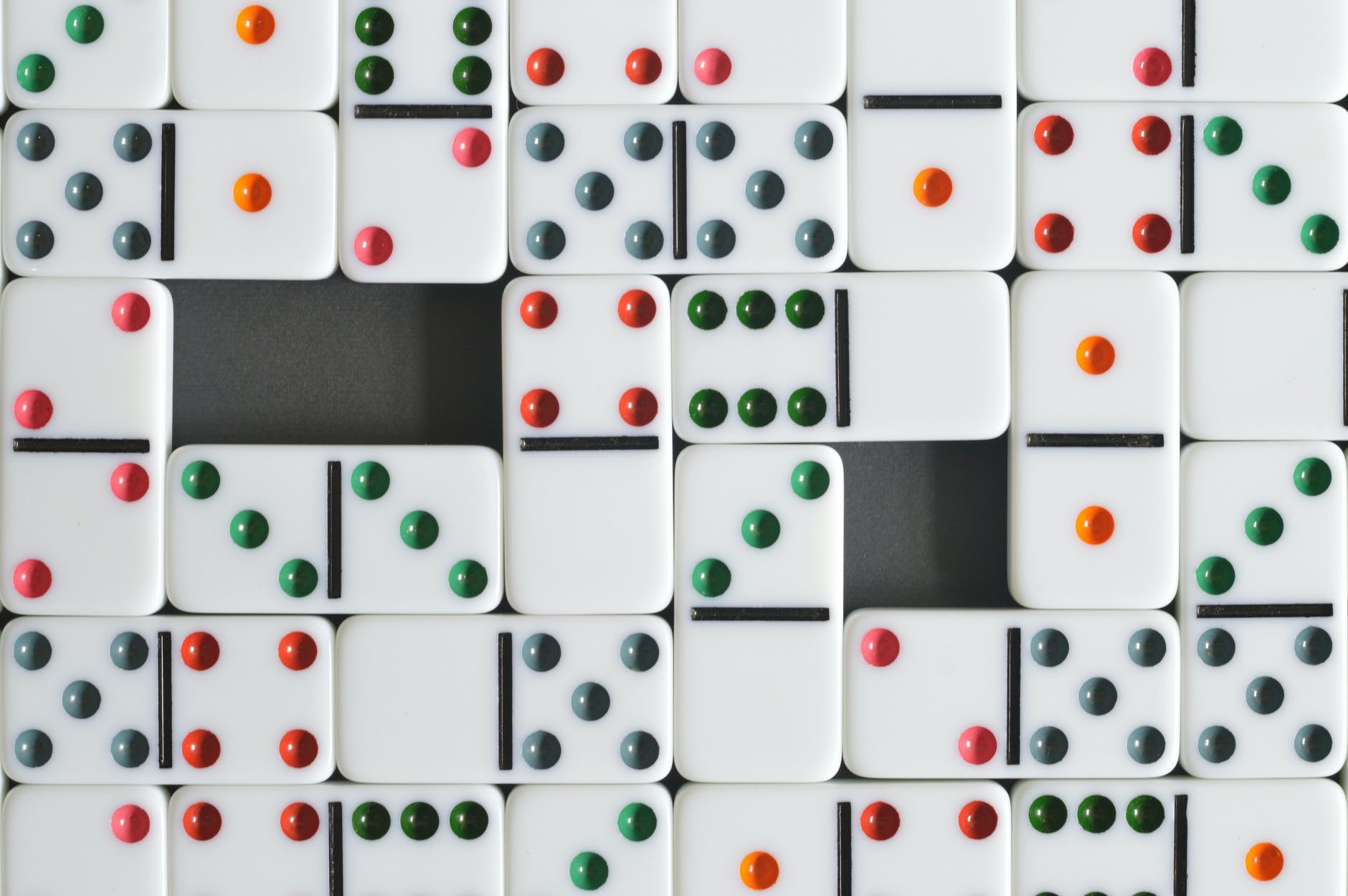
When adults count objects, they rarely count each individual thing. Instead, they subitize, or mentally put objects into groups of a known size. For example, when adults play dominoes, they rarely count each dot. The dots are arranged in a way that someone can look at the dots and know right away what number is represented.
In this math unit, my students are learning to skip count, make equal groups, and put numbers into arrays. I have been doing Dot Talks with them each day to help them practice these skills. In a Dot Talk, I will show the students a slide with dots on it. The students will try to figure out how many dots are on the screen by grouping them in different ways and adding the groups together. You can see an example Dot Talk from Jo Boaler and YouCubed here.

I knew that Dot Talks would be great for grouping objects and skip counting, but there was a surprising benefit that I didn’t realize until a few days into doing Dot Talks. Some of my students visualized the dots as corners of shapes, such as squares or triangles. They counted triangles by 3s and squares by 4s until they found the total number of dots. Normally, I would introduce my class to shapes and their corners toward the end of the school year, but my students naturally came across shapes and corners in this activity. I am glad they were able to get a taste of what it will be like later this year when we focus more on shapes.
I plan to adapt my Number Talks throughout the year to match each unit of study. Dot Talks were fun for skip counting and making equal groups, and I would highly recommend them to anyone who wants their students to use flexible thinking when they count!
 mind-the-gap.blog
I will be sharing this with Dr.Martin!
LikeLike